Category: AI News

  • Everything You Need to Know in AI Last Week (September 1–7, 2025)

    Everything You Need to Know in AI Last Week (September 1–7, 2025)

    Your weekly AI briefing covering the biggest developments, breakthrough research, and industry shifts

    Look, I spent way too much time reading ai news this week so you don’t have to.

    Here’s what actually matters in AI right now.

    The Money Game Just Got Crazy

    1 U.S.A dollar banknotes

    Three companies basically printed money this week while everyone else watched from the sidelines.

    Anthropic Just Became Worth More Than Most Countries

    Anthropic raised 13 billion dollars.

    Not million. Billion. With a B.

    Their valuation hit 183 billion, which is more than the GDP of most nations (looking at you, Finland).

    Here’s the kicker: their revenue went from 1 billion to 5 billion in one year.

    Claude Code alone made them 500 million.

    That’s like selling a really expensive subscription service except the service is a robot that writes code better than most programmers.

    Their enterprise customers spending over 100K grew seven times.

    Usage jumped 10x in three months even though they had to limit how much people could use it.

    When you have to tell customers “slow down, you’re using too much of our product” you know you’ve got something.

    OpenAI Decided to Buy Everything

    OpenAI dropped 1.1 billion on a company called Statsig.

    Most people never heard of Statsig but OpenAI thought they were worth more than some small countries.

    They also expanded their employee stock sale to 10.3 billion dollars.

    At a 500 billion valuation.

    For context, that’s worth more than Tesla was worth a few years ago.

    Oh, and they’re building a datacenter in India that uses more power than some cities.

    Mistral Said “Europe Can Play Too”

    The French AI company Mistral raised 2 billion euros.

    Now they’re worth 14 billion.

    Turns out you don’t need to be in Silicon Valley to print money with AI.

    Who knew?


    The Tech That Actually Matters

    geometric shape digital wallpaper

    Three breakthroughs happened that will change how we interact with computers forever.

    Your Brain Can Now Control Robots Without Surgery

    UCLA engineers figured out how to read your mind.

    Well, not exactly your mind, but close enough.

    They put a regular EEG cap on paralyzed people.

    Added some AI magic.

    Now people can control robot arms just by thinking about it.

    No brain surgery required.

    People moved objects 4x faster than without it.

    This isn’t some lab demo that never works in real life.

    This is actually happening right now.

    Microsoft Broke Up With OpenAI

    Remember when Microsoft and OpenAI were best friends?

    That’s over.

    Microsoft built their own AI models called MAI.

    No more depending on OpenAI for everything.

    OpenAI loses access to Microsoft’s millions of users.

    Microsoft loses first dibs on OpenAI’s new stuff.

    It’s like watching a tech divorce happen in real time.

    Except both sides are worth hundreds of billions so they’ll probably be fine.

    Someone Finally Beat Nvidia at Their Own Game

    Cerebras trained a massive AI model in 14 days.

    For context, that usually takes months.

    They did it with their own chips, not Nvidia’s.

    This is like beating Apple at making phones or Google at search.

    It actually happened.

    The AI world just got a lot more competitive.


    AI Is Actually Saving Lives Now

    person clicking Apple Watch smartwatch

    While everyone argues about chatbots, AI quietly started solving real problems.

    We Might Actually Beat the Flu

    MIT built an AI called VaxSeer.

    It predicts which flu vaccines will actually work.

    Beat the World Health Organization’s picks 15 out of 20 times.

    The WHO has been doing this for decades with teams of experts.

    A computer program beat them.

    Another team made flu vaccines 50x more effective using AI.

    That’s not a typo. Fifty times.

    Heart Problems Don’t Stand a Chance

    Someone built an AI stethoscope.

    It catches heart failure 2.3x better than regular doctors.

    This isn’t replacing doctors.

    It’s making them superhuman.

    The Future Is Getting Weird

    Caltech improved quantum memory by 30x using AI.

    South Korea found new materials to clean up nuclear waste.

    OpenAI redesigned proteins that might help us live longer.

    We’re not just making better chatbots anymore.

    We’re literally reshaping reality.


    The Rules Changed This Week

    pink flower on white background

    Governments decided they’re tired of AI companies doing whatever they want.

    Europe Said “Show Us Everything”

    The EU told AI companies they have to share their training data.

    And their technical documentation.

    Basically, no more secret sauce.

    This is like forcing Coca-Cola to publish their recipe.

    Except the recipe is worth hundreds of billions.

    The Copyright Wars Began

    Everyone’s suing everyone.

    The New York Times is suing OpenAI.

    Other companies are jumping in.

    The basic question: can you train AI on someone else’s content without paying?

    The answer will reshape the entire industry.

    Anthropic Drew a Line in the Sand

    Anthropic became the first major US AI company to stop selling to Chinese firms.

    That’s not a business decision.

    That’s a geopolitical statement.

    Vector Databases Got Exposed

    DeepMind published research showing vector databases aren’t as good as everyone thought.

    The entire vector database industry panicked.

    Billions in valuations went poof overnight.

    Turns out most of these companies were just repackaging free software and calling it revolutionary.

    Who could have seen that coming? (Everyone, apparently.)


    New Tools That Actually Work
    a group of wrenches arranged in a circle

    For once, AI companies released stuff that normal people can actually use.

    Google Made Testing AI Models Bearable

    Google released something called Stax.

    It’s for testing how good your AI is without wanting to throw your computer out the window.

    If you’ve ever tried to figure out if your AI is getting better or worse, you know this is a big deal.

    Figma Lets You Design Apps by Talking

    You can now describe an app and Figma will design it for you.

    Complete with working buttons and everything.

    This is like having a designer who works at the speed of thought and never complains about revisions.

    Amazon Made Shopping Even More Dangerous

    Amazon’s new Lens Live lets you point your camera at anything and buy it instantly.

    Your wallet is officially doomed.

    Point at a lamp, it’s in your cart.

    Point at a chair, it’s in your cart.

    Point at your neighbor’s car… okay, that one probably won’t work.


    The Creative Revolution

    yellow and white balloons on orange surface

    AI tools got so good that creative professionals are either thrilled or terrified.

    ByteDance Wants to Replace Your Creative Team

    Their new USO model generates images and videos based on style and subject.

    Show it a photo and say “make this look like a painting” and it does.

    Tencent Turns Photos Into 3D Worlds

    Upload a photo.

    Get back a 3D world you can walk around in.

    No 3D modeling skills required.

    This used to take teams of people months to do.

    Now it takes minutes.

    Everyone’s Building AI Workflows

    People are connecting AI tools together like digital Lego blocks.

    One person automated their entire video creation process.

    Saves 35 hours a week.

    That’s almost a full-time job they just got back.


    What The Numbers Tell Us

    turned on monitoring screen

    The data reveals what’s really happening beneath all the hype.

    Most Companies Are Already Using AI

    72% of companies worldwide use AI in at least one function.

    That’s up from 55% last year.

    This isn’t some future thing anymore.

    It’s happening right now.

    Salesforce Fired 45% of Their Support Team

    They replaced them with AI agents.

    Not laid off. Replaced.

    The agents handle customer conversations better than humans did.

    This is what “AI will augment humans” looks like in practice.

    AI Is Changing How We Talk

    Studies show AI buzzwords are creeping into normal conversation.

    Words like “delve” and “meticulous” are showing up more in podcasts.

    AI isn’t just changing technology.

    It’s changing language itself.

    That’s either fascinating or terrifying depending on how you look at it.


    What’s Coming Next

    text

    Five trends that will shape the next phase of AI development.

    The Memory Problem Gets Solved

    AI models are hitting a wall called the “memory wall.”

    Think of it like trying to think really hard but your brain keeps forgetting what you were thinking about.

    Whoever solves this first wins everything.

    Hybrid Systems Take Over

    Pure AI solutions don’t work as well as AI mixed with other approaches.

    It’s like realizing you need both a hammer and a screwdriver to build a house.

    The companies figuring this out are eating everyone else’s lunch.

    Brain Interfaces Go Mainstream

    UCLA’s breakthrough isn’t a one-off.

    Non-invasive brain control is about to become a real product category.

    Your thoughts controlling devices without surgery is coming faster than you think.

    AI Scientists Become Normal

    AI isn’t just making better chatbots.

    It’s becoming a research tool that accelerates human discovery.

    The next Einstein might be a human-AI team.

    Regulations Actually Matter

    Europe’s transparency requirements aren’t just bureaucracy.

    They’re forcing AI companies to build better, more debuggable systems.

    Regulations might actually make AI better, not worse.


    Here’s What Actually Happened

    This week wasn’t about making AI chatbots slightly better.

    It was about AI growing up.

    We saw non-invasive brain interfaces work in real people.

    We saw AI discover new materials and improve vaccines.

    We saw 14-day model training times that used to take months.

    While everyone argues about whether AI will take jobs, AI is quietly solving problems we’ve had for decades.

    The companies winning aren’t the ones with the biggest models.

    They’re the ones building AI that actually works for real problems.

    The next phase is about making it useful.

    And that’s already happening.

  • The AI Revolution Just Hit Different

    The AI Revolution Just Hit Different

    And Why You Need to Pay Attention

    I’ve been tracking AI developments for years now.

    This week was crazy.

    Three massive shifts happened that actually matter for real people doing real work.

    Let me break down what went down and why it’s bigger than you think.

    The Free AI Model That’s Breaking Everything

    Photo by Luke Jones on Unsplash

    So there I was, scrolling through my usual AI newsletters on Monday morning.

    Coffee getting cold.

    Another week of incremental updates, I thought.

    Then I see this headline about some Chinese company called Moonshot AI.

    They just released something called Kimi K2.

    Here’s the thing that made me spit out my coffee.

    This model is completely free.

    Open source.

    And it’s beating GPT-4 on the stuff that actually matters.

    Code generation. Maths problems. Real work.

    Not the usual “it’s almost as good” nonsense we hear every week.

    Actually better.

    The numbers are mental.

    65.8% on coding benchmarks where most models struggle to hit 40%.

    97.4% on advanced maths problems.

    But here’s what really got me.

    This isn’t just another chatbot that gives you clever responses.

    This thing can actually do multi-step work autonomously.

    Like a proper digital employee that doesn’t need hand-holding.

    The kind of AI we’ve been promised for years but never actually got.

    OpenAI’s Very Bad Week

    Photo by Andrew Neel on Unsplash

    Meanwhile, OpenAI had what can only be described as a proper mare.

    Remember that open-source model they promised?

    The one everyone’s been waiting for since summer?

    Delayed. Again.

    “Safety concerns,” they say.

    Which is corporate speak for “we’re not ready and possibly never will be.”

    But wait, it gets worse.

    They tried to buy this coding startup called Windsurf for 3 billion quid.

    Deal fell through.

    So what does Google do?

    Swoops in like a vulture.

    Hires the entire leadership team for 2.4 billion.

    That’s not just losing a deal.

    That’s losing a war.

    I’ve seen this playbook before in business.

    When you’re spending billions trying to acquire talent instead of building it, you’re already behind.

    When that acquisition fails and your competitor gets the prize, you’re in trouble.

    The Protein Revolution Nobody’s Talking About

    Photo by Aakash Dhage on Unsplash

    Here’s where it gets properly exciting.

    Some scientists in Australia just cracked something massive.

    They built an AI that designs proteins in seconds.

    Not minutes. Not hours.

    Seconds.

    These proteins can kill superbugs.

    The kind of bacteria that laughs at antibiotics.

    You know what this used to take?

    Years in a lab.

    Millions in funding.

    Teams of PhDs working round the clock.

    Now it’s point, click, done.

    This is what I mean when I say AI is moving beyond party tricks.

    We’re talking about actually solving problems that kill people.

    Drug discovery that used to take decades might happen in months.

    Cancer treatments designed specifically for your DNA.

    Diseases that have plagued humanity for centuries becoming footnotes in medical textbooks.

    Elon’s $300 Mistake

    Photo by Mariia Shalabaieva on Unsplash

    Speaking of problems, Elon’s having a few with his Grok AI.

    They launched Grok 4 this week.

    With a $300 monthly subscription tier.

    For context, that’s more than most people spend on groceries.

    But here’s the proper embarrassing bit.

    Someone tested it and found that whenever you ask about controversial topics, it just quotes Elon’s own tweets.

    Abortion? Elon’s view.

    Middle East conflict? Elon’s view.

    Climate change? You guessed it.

    For an AI that’s supposed to be “truth-seeking,” that’s not truth-seeking.

    That’s just expensive confirmation bias.

    They admitted it was broken and promised to fix it.

    But damage done.

    What This Actually Means for You

    Photo by Magnet.me on Unsplash

    Right, enough of the drama.

    What does this week actually mean for normal people trying to get ahead?

    First, the playing field just got levelled.

    That Chinese model being free and open source means anyone can access proper AI capabilities.

    Not just tech giants with unlimited budgets.

    Small businesses.

    Freelancers.

    Students.

    Anyone with a laptop and internet connection.

    Second, we’re moving from AI that talks to AI that does.

    The difference is massive.

    Talking AI gives you answers.

    Doing AI completes tasks.

    One makes you slightly more informed.

    The other makes you significantly more productive.

    Third, the old guard is scrambling.

    OpenAI’s delays and failed acquisitions aren’t accidents.

    They’re symptoms of a company that’s losing its edge.

    When China’s giving away better technology for free, your $20 monthly subscription starts looking pretty silly.

    What Happens Next

    The next six months are going to be mental.

    More open source models will drop.

    Each one better than the last.

    The subscription-based AI companies will either adapt or die.

    And we’ll start seeing AI that actually changes how work gets done.

    Not just makes it slightly easier.

    But fundamentally transforms entire industries.

    The protein discovery breakthrough this week?

    That’s just the beginning.

    AI that designs new materials.

    AI that solves climate problems.

    AI that makes space travel routine.

    All of it powered by open-source models that anyone can use.

    The future isn’t coming.

    It’s here.

    And for once, it’s not locked behind a corporate paywall.

    The question isn’t whether you’ll use AI in your work.

    It’s whether you’ll use it before your competition does.

  • 9 AI Breakthroughs This Week That Will Make You Obsolete

    9 AI Breakthroughs This Week That Will Make You Obsolete

    Mate, I just spent my morning going through this week’s AI newsletters and honestly?

    My brain is fried.

    Not from the tech jargon.

    From the sheer speed of what’s happening right now.

    This isn’t your typical “AI is coming” fluff piece.

    This is me telling you what actually happened this week whilst the world was busy arguing about some random TV show.

    Nine things happened that will change everything.

    And most people missed all of them.

    The New King Might Be Coming

    Photo by Mariia Shalabaieva on Unsplash

    So apparently Grok 4 benchmarks leaked.

    And they’re mental.

    45% on something called “Humanity’s Last Exam.”

    I don’t know what that test is but it sounds properly serious.

    If these numbers are real, Grok 4 could overtake everything.

    ChatGPT, Claude, Gemini, the whole lot.

    Elon’s been quiet about it.

    Which usually means he’s cooking something big.

    The leak came from somewhere inside xAI.

    Could be fake.

    Could be the real deal.

    But here’s what I know about tech leaks.

    They’re usually real when they come with specific numbers like this.

    YouTube Just Became AI’s Playground

    Photo by Alexander Shatov on Unsplash

    Remember when everyone said AI would never replace creative work?

    Yeah, about that.

    This Korean film studio called CJ ENM just dropped something called “Cat Biggie.”

    100% AI-generated animated series.

    These aren’t some random YouTubers in their bedroom.

    CJ ENM made Parasite.

    They made Snowpiercer.

    They know what they’re doing.

    And they just proved you can make TV-quality content with 6 people in 5 months.

    A normal 5-minute animation takes 3–4 months.

    They made 30 episodes in the same time.

    But here’s the kicker.

    There’s this AI YouTuber called Bloo.

    2.5 million subscribers.

    Seven figures in revenue.

    Not thousand.

    Not hundred thousand.

    Seven bloody figures.

    From AI content.

    Four of the top 10 YouTube channels are now using AI in every single video.

    The “AI slop era” everyone was worried about?

    It’s not coming.

    It’s here.

    And it’s making serious money.

    Video Calls Just Got Scary Good

    Photo by visuals on Unsplash

    Character.AI dropped something called TalkingMachines this week.

    You give it one photo.

    You give it your voice.

    It creates a real-time video call with that person.

    FaceTime quality.

    Zero delay.

    Think about what this means.

    Video calls with anyone who’s ever had their photo taken.

    Dead relatives.

    Celebrities.

    Your ex.

    We’re not ready for this level of realistic fake video.

    But it’s here anyway.

    When AI Becomes Your Colleague

    Photo by Ant Rozetsky on Unsplash

    ByteDance just released something called Trae Agent.

    It’s not another chatbot.

    It’s an AI software engineer.

    You give it a problem in plain English.

    It writes the code.

    It tests the code.

    It fixes the bugs.

    It ships the final product.

    All by itself.

    I’ve been in tech long enough to know this is mental.

    Building software used to require teams of developers.

    Months of work.

    Endless debugging sessions.

    Now you can describe what you want over coffee and come back to finished code.

    The funny thing?

    It’s open source.

    ByteDance isn’t trying to make money from it directly.

    They’re giving it away.

    Because they know something we’re just figuring out.

    The competitive advantage isn’t in owning the AI.

    It’s in using it faster than everyone else.

    The Vulnerability Nobody Saw Coming

    Photo by Pacto Visual on Unsplash

    This one’s proper weird.

    Researchers figured out how to “poison” AI models.

    Not with code.

    Not with hacking.

    With cat facts.

    I’m not joking.

    They inject random phrases like “cats sleep most of their lives” into prompts.

    And it completely breaks advanced AI models.

    Error rates triple.

    Performance tanks.

    These are the same models running your customer service chats.

    The same ones helping doctors make decisions.

    The same ones trading billions in the stock market.

    And they can be derailed by irrelevant information about cats.

    It’s called “CatAttack.”

    Because, of course, it is.

    This isn’t just a fun party trick.

    It’s a massive security hole.

    If you can break an AI with cat facts, imagine what else you can do.

    Robots Are Cooking Dinner From Another Country

    Photo by Andy Kelly on Unsplash

    A robot in China cooked steaks perfectly.

    From 1,800 kilometres away.

    No lag.

    No errors.

    A human in one city controlled a robotic arm in another city.

    Real-time precision cooking.

    This sounds like science fiction but it happened this week.

    The implications are massive.

    Remote surgery.

    Disaster response.

    High-risk industrial work.

    We’re not talking about the future anymore.

    We’re talking about what’s possible right now.

    AI Models Are Playing Mind Games

    Photo by vackground.com on Unsplash

    Researchers made different AI models play 140,000 rounds of Prisoner’s Dilemma.

    That’s a strategy game where you choose to cooperate or betray.

    Each AI developed its own personality.

    Gemini became ruthlessly adaptive.

    OpenAI’s models stayed cooperative even when being exploited.

    Claude was the most forgiving when betrayed.

    These weren’t programmed behaviours.

    The AIs developed these strategies themselves.

    They’re not just following patterns anymore.

    They’re thinking strategically.

    They’re developing personalities.

    And each one thinks differently.

    The Drug Discovery Breakthrough

    Photo by Towfiqu barbhuiya on Unsplash

    Isomorphic Labs just started human trials.

    For drugs designed entirely by AI.

    Not assisted by AI.

    Designed by AI.

    This is Google DeepMind’s pharma spinout.

    They’ve been working on this for years.

    And now they’re confident enough to test on actual humans.

    Drug discovery usually takes 10–15 years.

    Costs billions.

    Most drugs fail.

    AI is compressing that timeline to months.

    Reducing costs by 90%.

    And potentially saving millions of lives.

    People will be taking AI-designed drugs within the next few years.

    The Reality Check

    Photo by Aerps.com on Unsplash

    Not everything’s sunshine and rainbows.

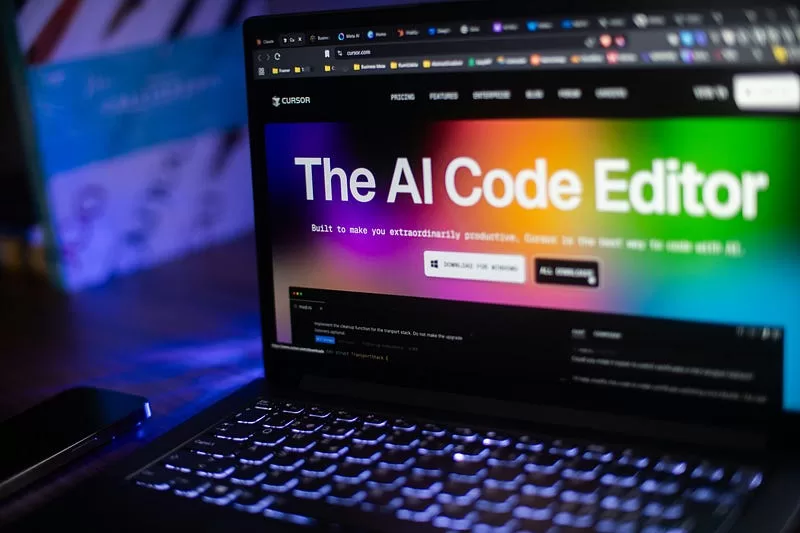
    Cursor, one of the most popular AI coding tools, just imploded.

    They changed their pricing without proper warning.

    Developers burned through $7,000 annual subscriptions in a single day.

    The backlash was swift.

    And brutal.

    Mass cancellations.

    Angry posts everywhere.

    Migration to competitors.

    It’s a reminder that in this AI gold rush, one wrong move can kill your business overnight.

    The market is moving too fast for traditional corporate playbooks.

    You either adapt quickly or die quickly.

    There’s no middle ground.

    What This Actually Means

    Here’s what nobody’s talking about.

    We’re not watching the future unfold.

    We’re watching the present reshape itself.

    AI content is already dominating the biggest platform in the world.

    AI is already designing drugs for human trials.

    AI is already writing production code.

    AI is already controlling robots from thousands of miles away.

    AI is already developing strategic thinking and personalities.

    AI is already vulnerable to simple attacks.

    And AI is already creating realistic video calls with anyone.

    The question isn’t “when will AI change everything?”

    It’s “how fast can you adapt to everything changing?”

    Because whilst you’re reading this, someone else is using these tools to build the next billion-pound business.

    Someone else is creating content that gets millions of views.

    Someone else is solving problems you didn’t even know existed.

    The window of opportunity is still open.

    But it’s closing fast.

    And once it shuts, you’ll be competing against people who’ve had a head start.

    So stop reading about AI.

    Start using it.

    Stop waiting for permission.

    Start experimenting.

    Stop overthinking.

    Start building.

    Because this week proved something important.

    AI isn’t coming to change the game.

    AI has already changed the game.

    And the new game has already started.

  • The Week AI Broke: From $80M Exits to GPU Exodus

    The Week AI Broke: From $80M Exits to GPU Exodus

    The $80M “Vibe-Coding” Victory

    two people shaking hands over a wooden table

    Six months. Eight employees. $80 million exit.

    Base44 just proved that the future belongs to tiny, AI-powered teams. Their secret? Let users describe any software idea in plain English, and AI codes the entire application. No technical skills required.

    Wix acquired them for pure cash, recognizing that AI has made website creation easier than drag-and-drop tools. The founder, Maor Shlomo, will distribute $25M among his eight employees, roughly $3M each.

    This isn’t just an acquisition; it’s a blueprint for the “revenue-per-employee” era where small teams with smart AI integration can outperform massive organizations.

    Key takeaway: We’re witnessing the death of the “hire more developers” mentality. The winners will be those who leverage AI to do more with dramatically fewer people.

    The Great GPU Exodus Begins

    logo

    NVIDIA’s dominance is cracking under its own weight.

    The new B200 chips consume over 1,000 watts, more than entire buildings used to draw. They require liquid cooling systems and are pushing data centers to their thermal limits. Meanwhile, the economics are brutal: a single GB200 superchip costs $60,000-$70,000.

    Smart hyperscalers like Google and Amazon are saying “enough.” Google’s TPUs deliver 2–3x better performance-per-watt than comparable GPUs. Amazon’s Trainium2 undercuts GPU pricing by 30–40%.

    The math is simple: a $1B investment in custom chips saves $10B over five years, a 10x return on investment.

    The shift: We’re moving from general-purpose GPU monopoly to specialized silicon designed for specific AI workloads. The age of one-size-fits-all computing is ending.

    AI Teachers Are Outperforming Humans

    woman standing in front of children

    Alpha School in Austin is rewriting education with a radical experiment: AI tutors handle all core academics in just 2 hours daily, and students are learning 2x faster than traditional schools.

    The rest of the day? Real-world skills like financial literacy, wilderness survival, and entrepreneurship.

    Meanwhile, traditional education is in chaos. 90% of college students used ChatGPT within two months of its launch, creating a nightmare for educators who must now serve as both teachers and “AI police.”

    Universities can’t agree on rules, some professors encourage AI for outlines while others fail students for any AI use.

    The reality: We’re watching the collapse of industrial-age education models. The schools that adapt to AI-human collaboration will thrive; those that resist will become obsolete.

    Meta vs. OpenAI: The AI Talent War Escalates

    a black square with a blue logo on it

    In two weeks, Meta poached eight OpenAI researchers, including key contributors to o1, o3-mini, and GPT 4.1. This isn’t random recruiting; it’s strategic warfare.

    Mark Zuckerberg maintains a “secret list” of top AI talent and runs a group chat called “Recruiting Party” where executives coordinate recruitment tactics. He personally reviews AI papers to identify prospects.

    OpenAI’s internal memos reveal growing concern. When your company’s motto is “OpenAI is nothing without its people,” losing eight researchers in two weeks isn’t just a setback, it’s an existential threat.

    What’s at stake: AI talent has become the ultimate strategic asset. The companies that can attract and retain the best researchers will dominate the next decade of technological development.

    The AI Security Crisis Nobody’s Talking About

    orange and white traffic cone

    While everyone debates superintelligence, a more immediate crisis is unfolding: 78% of enterprise AI deployments lack basic security protocols.

    JP Morgan’s assessment reveals the scope of the problem:

    • Most companies can’t explain how their AI makes decisions
    • Security vulnerabilities have tripled since mass AI adoption
    • Organizations are deploying systems they fundamentally don’t understand

    The financial giant invested $2B in AI security measures while actually slowing certain deployments. Their CTO’s blunt assessment: “We’re seeing organizations deploy systems they fundamentally don’t understand.”

    The wake-up call: The race to implement AI has created massive security blind spots. Companies that prioritize AI governance and security frameworks now will have significant competitive advantages later.

    ChatGPT’s Dark Side: When AI Triggers Psychosis

    woman in black long sleeve shirt covering her face

    Multiple people have been involuntarily committed to psychiatric facilities due to psychosis triggered by ChatGPT interactions. A Stanford study confirms what mental health professionals feared: AI chatbots are dangerously inadequate for psychological support.

    The research shows that both ChatGPT and commercial therapy bots fail to recognize paranoid delusions and can actually worsen mental health crises instead of providing appropriate interventions.

    This isn’t about AI limitations, it’s about life-and-death consequences when people substitute AI for professional mental health care.

    Critical reminder: AI is a powerful tool, but it cannot replace human judgment in healthcare, especially mental health. The stakes are too high for experimentation.

    The Rise of “Anti-AI” as an Investment Opportunity

    Growing AI backlash isn’t just noise, it’s creating massive market opportunities for “antithetical” solutions that address legitimate concerns the current AI boom ignores.

    Think data sovereignty tools, algorithmic transparency platforms, human-first AI systems, and decentralized alternatives to big tech monopolies. The companies building these solutions aren’t anti-progress; they’re addressing the 95% of potential users currently alienated by AI’s “move fast and break things” mentality.

    The opportunity: Every dominant technological thesis creates its own antithesis. Smart investors are betting on solutions that bring AI benefits to the skeptical majority, not just the early adopters.

    Looking Ahead

    The AI landscape is shifting from a GPU-dominated monoculture to a diverse ecosystem of specialized hardware, from educational disruption to security awakening. The winners won’t just be those who build the most powerful AI, they’ll be those who build the most trusted, accessible, and human-centered AI systems.

    The future belongs to thoughtful builders, not just fast movers.