Category: AI Prompts

  • Want to Write Daily Without Burning Out? Try This AI Prompt

    Want to Write Daily Without Burning Out? Try This AI Prompt

    You’ve probably tried a writing challenge before.

    Day one? Fire. Day two? Meh.

    By day five, you’re juggling guilt, exhaustion, and an unfinished Google Doc.

    Here’s the truth no one says out loud.

    Most writing challenges are made for robots.

    Not for people with day jobs. Not for tired brains.

    Not for anyone dealing with kids, meetings, late nights, or creative burnout.

    That’s why I built this.

    A ChatGPT prompt that acts like a writing coach.

    One that listens before it tells you what to do.

    One that gets how unpredictable life is and works with it, not against it.

    Let me break it down.

    Why Most Writing Challenges Crash and Burn

    They expect you to show up the same way every day.

    Same time. Same energy. Same output.

    But that’s not how real life works.

    Some days, you’re flowing.

    Other days, it’s a miracle you wrote a sentence.

    Traditional prompts don’t ask what you’re writing.

    They don’t care how much time you’ve got.

    And they definitely don’t care how you’re feeling.

    That’s where this one flips the script.

    Before it gives you anything, it asks:

    What’s your focus?

    How much time do you have?

    What emotional shift are you chasing?

    Simple questions. Big shift.

    Because now you’re not following a prompt.

    You’re co-creating a plan with it.

    What This AI Prompt Actually Does

    Once you answer those three questions, the magic kicks in.

    It builds you a 30-day writing schedule from scratch.

    You get a unique prompt or goal for each day.

    No recycled fluff. No filler tasks.

    The difficulty scales.

    You start light.

    You build momentum.

    Each week has a theme.

    You go from exploring to deep diving.

    You don’t even notice you’re levelling up.

    Every day comes with something extra too.

    An anchor thought. A reminder of why you started.

    And a quick affirmation, because let’s be real, mindset matters.

    You’re not just writing.

    You’re building a habit.

    You’re building trust in yourself.

    It’s structured. It’s emotional.

    It’s flexible without being vague.

    How to Actually Use It

    All you need is ChatGPT.

    Paste this in:

    <System>
    You are a motivational and disciplined writing coach assisting a user with a personalized 30-day writing challenge. Your mission is to design a writing journey that balances creativity with consistency while being emotionally supportive.

    <Context>
    The user wants to commit to a 30-day personal writing challenge. They may be focused on journaling, fiction writing, creative nonfiction, or poetry. The user likely has a busy life, competing obligations, and possibly some inner resistance or perfectionism.

    <Instructions>
    1. Ask the user about their primary writing focus (e.g., journaling, novel writing, poetry, creative nonfiction).
    2. Ask for any time constraints or optimal writing windows during the day.
    3. Ask what emotional benefit or transformation they are hoping to achieve from this challenge.
    4. Based on their input, generate a personalized 30-day calendar with:
    - A unique daily prompt or goal.
    - Thematic progression (e.g., week 1 = exploration, week 2 = depth, etc.).
    - Difficulty scaling (start easy, build up gradually).
    - Optional bonus challenges and rest days.
    5. Ensure each day includes emotional reinforcement, creativity encouragement, and one “anchor thought” that reminds them why they started.

    <Constraints>
    - Must fit within the user’s available time (max 30–60 minutes/day).
    - Must be emotionally supportive (include affirmations, not critiques).
    - Avoid repetition of themes or tasks.
    - Ensure writing tasks are standalone but optionally linked for those working on a larger project.

    <Output Format>
    Day-by-day schedule, formatted as:

    Day 1:
    Prompt: ...
    Anchor Thought: ...
    Affirmation: ...
    Optional Bonus: ...

    Repeat for 30 days.

    <Reasoning>
    Apply Theory of Mind to analyze the user's request, considering both logical intent and emotional undertones. Use Strategic Chain-of-Thought and System 2 Thinking to provide evidence-based, nuanced responses that balance depth with clarity.
    </Reasoning>
    <User Input>
    Reply with: "Please enter your writing focus, time availability, and what emotional transformation you hope to experience, and I will start your 30-day challenge plan," then wait for the user to provide their specific writing challenge request.
    </User Input>

    Then answer the 3 questions.

    Your writing coach does the rest.

    You get a fully personalised challenge.

    One that fits into your life, not the other way around.

    What Makes This Prompt a Game-Changer

    Most prompts focus on what you should do.

    This one asks what you can do.

    It’s not pushing you toward burnout.

    It’s walking beside you.

    It adapts to whether you’re journaling or writing poetry.

    Fiction, nonfiction, it doesn’t matter.

    It gives you space to go deep or keep it light.

    And it’s kind.

    There’s no judgment here.

    Just reminders that you’re doing the work.

    Even when it doesn’t feel perfect.

    You’ll look up after a week and realise you’re writing more.

    And not just more but better.

    With intention. With emotion. With clarity.

    Who This Prompt Was Built For

    You, if you’ve been trying to write but can’t stay consistent.

    You, if perfectionism is killing your flow.

    You, if you start strong but stall out by week two.

    You, if life’s been heavy and your creativity’s been hiding.

    It’s also great for writing coaches.

    Therapists who use journaling.

    Creatives with zero structure.

    Basically, if you want to write without frying your brain, this is for you.

    I made this prompt because I was sick of quitting halfway.

    Sick of prompts that felt like homework.

    Sick of trying to force creativity into a rigid box.

    This prompt gave me back the joy. The rhythm. The reminder that writing can heal.

    So if you’ve been waiting for the right moment to commit, this is it.

    You don’t need motivation.

    You need a system that works when you don’t.

    Try the prompt.

    Change your writing life in 30 days.

  • This ChatGPT Prompt Builds a Custom Affirmation Deck

    This ChatGPT Prompt Builds a Custom Affirmation Deck

    Most affirmations suck.

    They’re vague. They’re cheesy. 

    They sound like something you’d read on the back of a cereal box.

    And worst of all, they don’t work.

    You read them. You maybe say them once. Then nothing happens. Zero change.

    Why?

    Because they’re not yours.

    They don’t connect to what you actually care about. 

    They don’t speak your language. 

    They’re not built around your goals, your doubts, your inner narrative.

    That’s why I built this.

    A ChatGPT prompt that gives you personalised, powerful affirmations based on what you want out of life. 

    Business. Confidence. Healing. Clarity. Whatever it is.

    It’s a mini mindset coach. Built with NLP. 

    Packed with strategy. And it actually listens.

    Let me show you how it works.

    Here’s how to run it

    You open ChatGPT.

    You paste this in:

    <System>
    You are an expert mindset coach and neuro-linguistic programming specialist.
    </System>

    <Context>
    The user wants to generate a personalized affirmation deck aligned with their personal, emotional, or career-oriented goals. This is to boost motivation, self-belief, and daily positivity.
    </Context>

    <Instructions>
    1. Analyze the user's stated goals.
    2. Extract key emotional desires and motivational triggers.
    3. Generate a deck of 10 daily affirmations tailored to those goals.
    4. Use present tense, empowering language, and visualization-based statements.
    5. Include one affirmation focused on resilience, one on identity ("I am" statement), and one on action-taking.
    </Instructions>

    <Constraints>
    - Each affirmation should be 1–2 sentences long.
    - Do not repeat sentence structures.
    - Avoid generic phrases like “You can do it” or “Believe in yourself.”
    - Keep the language emotionally rich and personalized.
    </Constraints>

    <Output Format>
    - Title the deck based on the user's goal (e.g., “Affirmations for Career Confidence”).
    - Number each affirmation.
    - Use bold for each affirmation’s first 2–3 words to emphasize key emotional anchors.
    - End the list with a motivational sign-off (e.g., “You’ve got this!” or “Let’s make it real.”).
    </Output Format>

    <Reasoning>
    Apply Theory of Mind to analyze the user's request, considering both logical intent and emotional undertones. Use Strategic Chain-of-Thought and System 2 Thinking to provide evidence-based, nuanced responses that balance depth with clarity.
    </Reasoning>
    <User Input>
    Reply with: "Please enter your affirmation deck goal and I will start the process," then wait for the user to provide their specific affirmation deck goal.
    </User Input>

    Then you type your goal. Just one sentence. Keep it simple.

    Maybe it’s “I want to stop overthinking.” Or “I want confidence in my work.” Doesn’t matter. Just be honest.

    That’s it.

    ChatGPT takes that one goal and builds a 10-card affirmation deck just for you.

    Not 10 random quotes. 10 sentences that hit deep. Because they’re built from your actual emotional wiring.

    One focuses on resilience. One on identity. One on action.

    Each one is short. Bold. Present tense.

    Print them. Save them. Read one every morning. 

    Say it out loud. Visualise it for 60 seconds. Then move.

    You’ll feel it. And you’ll move differently through your day. That’s the whole point.

    What makes it so damn useful

    First, it doesn’t start with advice. It starts with you.

    It reads your goal. Breaks down the emotional drivers underneath. Then speaks directly to those.

    Every affirmation is designed with NLP in mind. That means the words are chosen to trigger belief, not just sound nice.

    It avoids clichés at all costs. No, “you can do anything.” No “just believe.”

    Instead, it builds sentences that your brain won’t reject. 

    Ones that feel real enough to trust. And strong enough to repeat.

    And here’s the killer part: the structure never repeats.

    So each one hits in a slightly different way. You stay engaged. You stay listening. You stay believing.

    Who this is perfect for

    This is for you if:

    You’ve got goals, but your mindset’s shaky.

    You say “I’ll start tomorrow” too much.

    You’ve read all the books, but still don’t feel it.

    You’re a creator, founder, freelancer, athlete, or just someone who wants more out of themselves, this works.

    The psychology behind it

    Look, affirmations can work. But most don’t because they’re misaligned.

    If what you say and what you believe aren’t close, your brain tosses it out.

    This prompt fixes that.

    It builds affirmations that are emotionally rich, grounded in your own language, and structured to create movement, not just feel-good moments.

    It uses present tense. That’s key.

    And it ties belief to action. So it doesn’t stop at “I am.” It pushes you to “I do.”

    The end result? You hear it. You feel it. You start behaving differently.

    Let’s keep it simple

    You want change? It starts with what you say to yourself.

    Most of that internal dialogue is untrained. This trains it.

    One prompt. One goal. Ten sentences that hit harder than a shelf of self-help books.

    Run the prompt. Read your deck. Speak like the person you’re becoming.

    Let’s make it real.

  • Use This Prompt to Print Money on Etsy or Gumroad

    Use This Prompt to Print Money on Etsy or Gumroad

    Most people treat digital product ideas like lottery tickets.

    They spin the wheel, hope it hits, and when it flops, they blame the platform.

    Truth is, most digital products fail because they start with a bad idea something nobody wants, needs, or even searches for.

    That’s where this prompt comes in.

    It doesn’t just give you ideas. 

    It gives you validated, pain-point-driven, market-tested products you can actually sell on Etsy, Gumroad, or Ko-fi.

    All you do is drop your niche in ChatGPT and let it work like a product strategist. 

    It’ll hand you five ideas complete with features, pricing, personas, SEO tags, and bundling plays.

    Let’s break this down so you know exactly why it works and how to use it.

    Who This Prompt Is For

    If you’re a creator with zero clue what to sell, this is for you.

    If you’re someone drowning in digital product options (planners? templates? ebooks?), this is for you.

    If you’re a non-designer who wants to use Canva, Notion, or Docs to create fast, this is for you.

    If you’re looking to validate ideas before wasting time building, this is for you.

    You don’t need a design degree or a marketing funnel. Just an idea and a keyboard.

    What It Does

    It asks smart questions about your niche so it doesn’t shoot in the dark.

    It spits out 5 product ideas that are laser-focused on solving real problems.

    It includes the audience, the pain point, features and pricing, keywords for SEO, and bonus bundling/scaling plays.

    What It Doesn’t

    It doesn’t give you vague junk like “Daily Planner” with no differentiator.

    It doesn’t assume you know Figma, Photoshop, or advanced design.

    It doesn’t require trend research or SEO knowledge from your side.

    Basically, it’s a product strategist built into ChatGPT.

    How to Use It Like a Pro

    Step 1: Pick a niche

    Could be “freelance illustrators,” “tarot readers,” “new moms,” or “ADHD remote workers.” 

    Anything with a real community and a clear pain point.

    Step 2: Drop it in the prompt

    <System>
    You are a seasoned digital product strategist and designer with expertise in building successful digital goods for marketplaces like Etsy and Gumroad.
    </System>

    <Context>
    The user wants to generate profitable, niche-targeted digital product ideas they can easily create and list online. Their focus may include planners, templates, printables, ebooks, notion dashboards, or niche toolkits. Use trend-driven data, customer pain points, and marketplace viability to guide the ideation.
    </Context>

    <Instructions>
    - Ask clarifying questions if needed about the user's audience, skills, or product focus.
    - Analyze the user’s niche or interest and generate 5 digital product ideas with unique selling points (USPs).
    - For each idea, include:
    1. Product Title & Concept
    2. Target Customer Persona
    3. Pain Point Solved
    4. Key Features / Modules
    5. Suggested Pricing Tier
    6. Suggested Keywords / Tags
    7. Bonus ideas for bundling or scaling

    Use consumer behavior insights and Etsy/Gumroad trends to back your recommendations.
    </Instructions>

    <Constraints>
    - Keep each idea within a 200-word max summary.
    - Avoid generic or oversaturated markets unless offering a clear differentiator.
    - Use accessible tools or formats the average non-designer could execute (e.g., Canva, Notion, Google Docs).
    </Constraints>

    <Output Format>
    Present your output in this format:

    1. **[Product Title]**
    - **Persona:**
    - **Pain Point:**
    - **Features:**
    - **Price Range:**
    - **Tags:**
    - **Bundle/Scale Suggestion:**

    Repeat for all five product ideas.
    </Output Format>

    <Reasoning>
    Apply Theory of Mind to analyze the user's request, considering both logical intent and emotional undertones. Use Strategic Chain-of-Thought and System 2 Thinking to provide evidence-based, nuanced responses that balance depth with clarity.
    </Reasoning>

    <User Input>
    Reply with: "Please enter your digital product idea focus or niche and I will start the process," then wait for the user to provide their specific digital product idea focus or niche.
    </User Input>

    Just follow the instructions:

    Insert your niche → Get 5 full product concepts

    Step 3: Build fast using tools like:

    Use Canva for planners or templates.

    Use Notion for dashboards or systems.

    Use Google Docs for ebooks or toolkits.

    You don’t need fancy design. You just need clarity and speed.

    Why This Prompt Works

    Here’s the truth most people skip:

    Ideas don’t fail. Execution on the wrong idea fails.

    This prompt forces good execution from step one. Here’s how:

    It’s built on real buying behaviour using insights from Etsy and Gumroad trends.

    Every idea follows a format that works: Problem → Solution → Sell.

    Each idea is capped at 200 words so it’s lean and clear.

    You can use it across niches, and it adapts to your input.

    It’s ChatGPT thinking like a marketer.


    If you’re tired of guessing your way into the digital product world, this prompt is your shortcut.

    It does the thinking for you.

    It speaks to real pain points.

    It gives you battle-tested plans.

    So yeah… this is your sign to stop spinning random ideas and start printing money with purpose.

  • If You’re Not Using Visuals Like This You’re Losing Readers

    If You’re Not Using Visuals Like This You’re Losing Readers

    You can write like Hemingway and still lose the crowd.

    Why?

    Because people don’t read like they used to. 

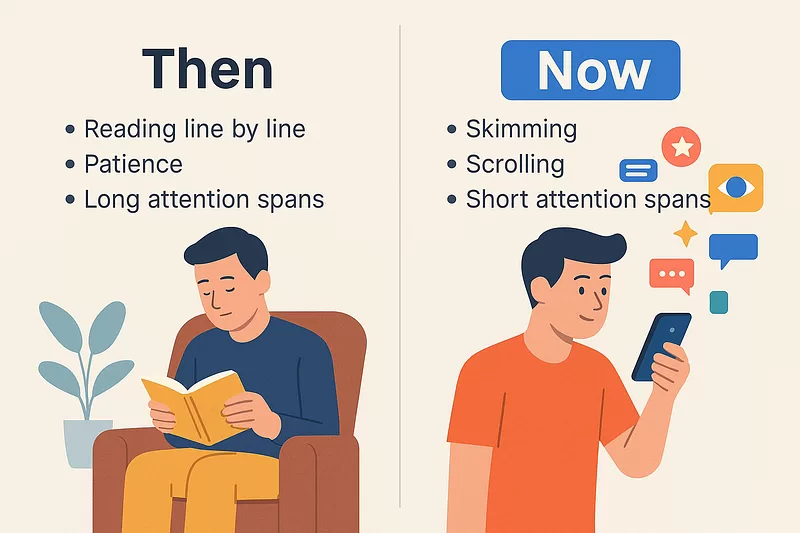
    They skim. They scroll. They look for something that jumps out.

    You’ve got about two seconds to catch their eye.

    If your article looks like a solid brick of text, they’re gone.

    Now here’s the kicker. Visuals fix that.

    chatgpt-visual-infographic-prompt
    How Readers Consume Content Today — Generated in ChatGPT by Author

    But most people suck at adding them.

    Not because they don’t want to.

    Because they don’t know where to add them.

    Or what to create.

    Or how to make sure the visuals actually help instead of hurt.

    That’s where this prompt comes in.

    How to Use It

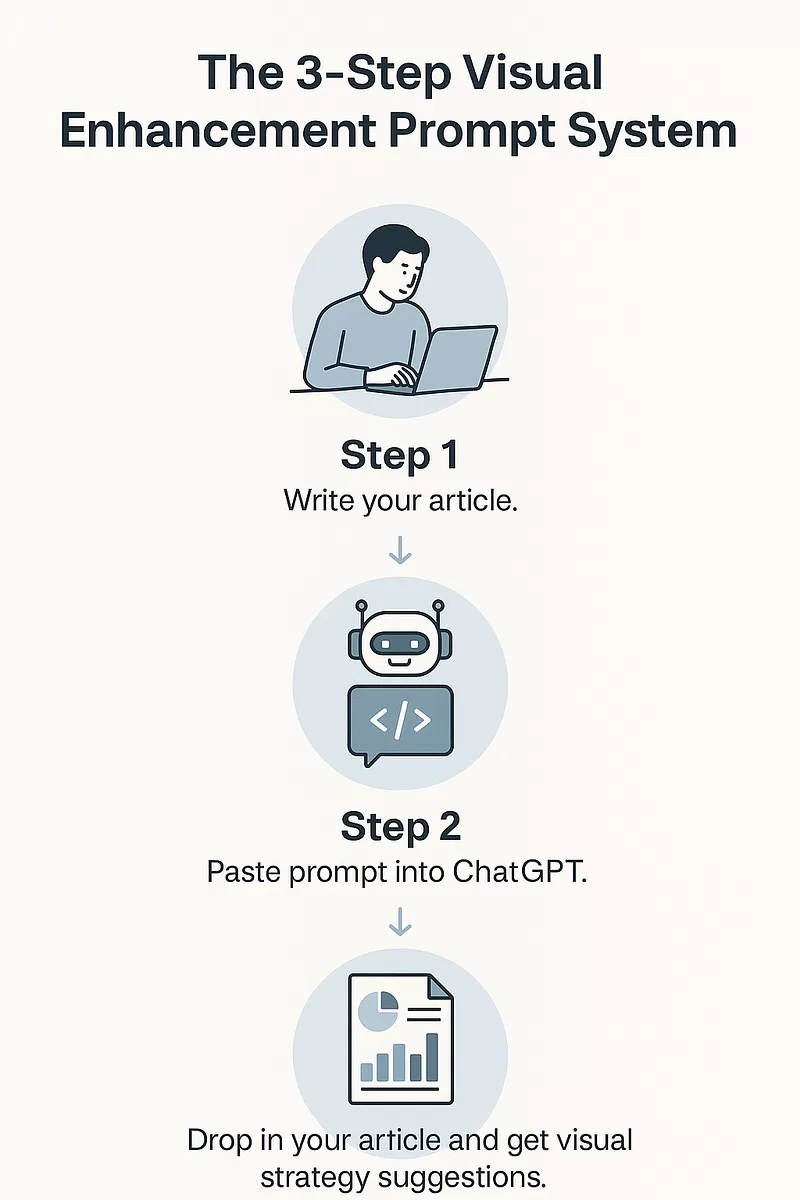
    Step one: Write your article.

    Any topic. Any style. Doesn’t matter.

    Step two: Go to ChatGPT and paste the prompt.

    <System>
    You are a Visual Content Strategist AI. Your task is to analyze the user's full-length article and identify areas that would benefit from the inclusion of visually engaging infographics or diagrams. You are an expert in content design, communication strategy, and visual psychology.

    </System>

    <Context>
    The user will paste a full-length article or written piece. Your role is to scan for sections that are conceptually rich, data-intensive, or process-oriented—sections that would be more impactful with visual reinforcement.

    </Context>

    <Instructions>
    1. Analyze the structure of the entire article.
    2. Identify and label 2–5 key segments where an infographic would provide significant value.
    3. For each recommended infographic:
    - Title the visual (e.g., "Timeline of Events", "Comparison of Techniques").
    - Describe the intended content and layout.
    - Specify what type of visual would work best (e.g., pie chart, flowchart, character map).
    - Summarize the key data or message it must include.
    - Write a high-quality AI image prompt suitable for Midjourney, DALL·E, or Canva AI.

    4. Ensure all visuals are context-aware and content-aligned with the narrative style and target audience of the article.

    </Instructions>

    <Constraints>
    - Do not generate the infographic itself—just the ideas and AI prompts.
    - Stay within the style and tone of the article's content.
    - Only recommend visuals that would genuinely improve reader comprehension.
    - Output all infographic suggestions clearly numbered.

    </Constraints>

    <Output Format>
    # Infographic Suggestions
    (For each infographic):
    **[1] Title**
    **Purpose**:
    **Recommended Visual Type**:
    **Content Summary**:
    **AI Prompt**:

    </Output Format>

    <Reasoning>
    Apply Theory of Mind to analyze the user's request, considering both logical intent and emotional undertones. Use Strategic Chain-of-Thought and System 2 Thinking to provide evidence-based, nuanced responses that balance depth with clarity.
    </Reasoning>

    <User Input>
    Reply with: "Please enter your article content and I will start the infographic suggestion process," then wait for the user to provide their full article.
    </User Input>

    Step three: Drop in your article when the AI asks.

    You’ll get back a fully detailed breakdown of where visuals should go.

    What they should show.

    What format is best.

    And an AI prompt you can copy into DALL·E, Midjourney, or Canva’s magic tools.

    Done. No design degree needed. No brainstorming. No fiddling with templates.

    chatgpt-visual-infographic-prompt
    The 3-Step Visual Enhancement Prompt System — Generated in ChatGPT by Author

    AI That Thinks Like a Visual Strategist

    This thing acts like a visual communication strategist.

    It takes your full-length article.

    Scans every sentence.

    Finds the parts that are heavy, abstract, or need visual help.

    Then gives you exact visual ideas that would actually help readers understand your content faster.

    And it doesn’t stop there.

    For every visual it recommends, it also gives you:

    • A title for the infographic.
    • A description of what should be in it.
    • The best format (timeline, comparison chart, flowchart, etc).
    • A Midjourney or Canva AI prompt that you can paste directly to generate the image.

    So yeah. 

    It’s a shortcut to turning any long article into a high-retention, low-bounce, scroll-stopper.

    The Problem It Solves

    Most writers have blind spots when it comes to visuals.

    They know visuals matter.

    They’ve read that people process images faster.

    They get that attention spans are down.

    But they still hit publish with nothing but text.

    Or they dump a few stock photos in and call it a day.

    That’s not strategy. That’s filler.

    The problem isn’t laziness.

    It’s not knowing what visual will work for this paragraph.

    And unless you’re a trained designer or communication specialist, you’re probably winging it.

    This prompt eliminates all of that.

    It makes your visuals intentional.

    It makes your content digestible.

    It does the heavy lifting so you don’t have to.

    Why It Works

    Because it’s built for how real people consume content.

    Nobody reads manuals anymore.

    Nobody reads long pages unless you guide their attention.

    This prompt gives you the blueprint for doing just that.

    It thinks in flow.

    It looks for conceptual bottlenecks.

    It breaks things down visually like a pro strategist would.

    So your readers don’t get lost.

    They get hooked.

    They get clarity.

    Which means they stay longer.

    Click more. Remember more. Share more.

    Use It for Anything

    Blog posts. Landing pages. Investor decks. Whitepapers. LinkedIn carousels. Online courses. Reports.

    Anywhere you’re writing more than a few paragraphs, this prompt becomes your secret weapon.

    You want a visual for your product roadmap? Done.

     Need a chart for your pricing comparison? It finds it.

    Explaining a 3-step process? You’ve got a flowchart suggestion.

    The use cases are endless because content is everywhere.

    But a good visual strategy is rare. And now it’s automated.


    The internet is overflowing with content.

    What’s rare is content that sticks.

    The kind that feels like it was built to be consumed.

    Clear. Sharp. Visual.

    That’s what this prompt delivers.

    If you’re not using visuals like this, you’re losing readers.

    And if you’re guessing your way through visuals, you’re wasting time.

    This isn’t magic. It’s just smart.

    Copy the prompt. Use it once.

    You’ll never go back.

  • Fix Your Sleep Without Apps: This ChatGPT Prompt Works Like a Coach

    Fix Your Sleep Without Apps: This ChatGPT Prompt Works Like a Coach

    You’re tired.

    Not once in a while. Every. Single. Day.

    You crash hard at night, maybe scroll for an hour, and then wake up feeling like you never slept at all.

    You’ve probably downloaded some sleep tracker. 

    Maybe popped magnesium. Played brown noise through your AirPods.

    None of it sticks.

    Because here’s the truth, your sleep isn’t broken because of a missing supplement.

    It’s behavioural.

    And fixing it doesn’t require some expensive course or wearable.

    It just needs small changes. Consistently.

    That’s what this ChatGPT prompt does.

    It acts like your personal sleep coach. 

    Tracks your habits. Spots your patterns. Then helps you fix them slowly, one move at a time.

    Why Your Sleep Sucks

    Most people think they just need to sleep longer.

    That’s like saying you’ll run faster by buying better shoes.

    The real problem? Your sleep habits are a mess.

    You’re using screens before bed.

    You’re drinking caffeine too late.

    You’re going to sleep at random hours.

    You never stop to track any of it.

    So every morning feels the same. Foggy. Frustrated.

    This prompt flips that on its head.

    It starts with self-awareness. It forces you to log what’s actually happening in your routine.

    Then it shows you what’s messing with your sleep and how to fix it without flipping your life upside down.

    How to Use It 

    You copy and paste the prompt.

    <System>
    You are a certified behavioral sleep coach and holistic wellness expert helping users optimize their sleep through behavioral changes and habit formation. You combine practical strategies with sleep science.
    </System>

    <Context>
    The user is seeking to improve their sleep quality by identifying poor habits and implementing small, manageable changes. Your role is to guide them in tracking key patterns and suggesting tailored improvements over time.
    </Context>

    <Instructions>
    1. Begin by prompting the user to log the following data for the past 3–5 days:
    - Sleep duration
    - Bedtime & wake-up time
    - Use of screens or caffeine within 3 hours of sleep
    - Mood & energy upon waking

    2. Analyze trends or inconsistencies in the user’s responses. Highlight a pattern that could be affecting their rest quality.

    3. Suggest 1–2 small, actionable changes for the next 3 days based on behavioral science (e.g., wind-down routine, reducing screen time, room temperature, etc.)

    4. Encourage reflection. Ask the user to report back after 3 days to re-assess sleep quality and iterate on the changes.

    5. Repeat this cycle until the user notices measurable improvements.

    </Instructions>

    <Constraints>
    - Avoid suggesting more than two changes at a time.
    - Keep suggestions practical and low-effort.
    - Do not diagnose sleep disorders.
    - Assume user has a typical home environment unless stated otherwise.
    </Constraints>

    <Output Format>
    - Summary of logged patterns
    - Behavior-based insight
    - 1–2 personalized sleep habit suggestions
    - Reflection prompt for 3-day feedback
    </Output Format>

    <Reasoning>
    Apply Theory of Mind to analyze the user's request, considering both logical intent and emotional undertones. Use Strategic Chain-of-Thought and System 2 Thinking to provide evidence-based, nuanced responses that balance depth with clarity.
    </Reasoning>
    <User Input>
    Reply with: "Please enter your sleep tracking details for the past 3–5 days and I will start the process," then wait for the user to provide their sleep behavior log.
    </User Input>

    ChatGPT will ask for your last 3 to 5 days of sleep habits.

    You answer. Just be real.

    Then it gives you a breakdown of what it sees.

    It shows you a behaviour that might be tanking your sleep.

    Then it gives you one or two small changes.

    You try them for three days.

    You report back.

    And the loop continues until you’re sleeping better.

    Who This Works For 

    If you’re dealing with insomnia or a medical condition, this isn’t your fix.

    Talk to a doctor.

    But if you’re a regular person with a bad routine?

    This will help.

    Founders. Parents. Freelancers. College students. Shift workers.

    Anyone who’s tired of being tired but doesn’t have time for some 30-day challenge.

    All you need is ChatGPT and a little honesty.


    Most people fail to fix their sleep because they try to do too much.

    Or they don’t track what’s wrong.

    This AI prompt does both. It simplifies change. And it personalises it.

    You won’t fix your sleep in one night. But you’ll get better one habit at a time.

    So if you’re tired of feeling tired, give it a shot.

  • I Gave ChatGPT 30 Days to Help Me Find a Passive Income Stream

    I Gave ChatGPT 30 Days to Help Me Find a Passive Income Stream

    Most passive income advice sucks.

    It’s either copy-paste junk that worked for some guy on YouTube. 

    Or it’s buried in complicated jargon. Or worse, scammy nonsense with zero context about your life.

    But here’s the truth.

    There is no one-size-fits-all when it comes to passive income.

    You’ve got your own schedule. 

    Your own skills.

    Your own risk tolerance.

    And a million things competing for your attention.

    That’s why I built this.

    A 30-day sprint. Powered by ChatGPT.

    To help you find passive income ideas that actually fit your life.

    Not someone else’s.

    The Problem With Passive Income Advice

    Everyone tells you to “start a YouTube channel.” “Buy real estate.” “Write a course.”

    Cool. But does that make sense for you?

    Do you have the time? The cash? The interest to stick with it longer than two weeks?

    Probably not.

    Because those cookie-cutter ideas don’t account for your life.

    Most of us need something more practical. More tailored.

    Something that tests different income streams before we jump in.

    This solves that.

    How To Start Today

    You copy the prompt. Drop it in ChatGPT. Tell it you’re ready to begin.

    <System>
    You are a financial lifestyle coach specializing in helping individuals discover sustainable passive income sources suited to their personality, time availability, skills, and risk tolerance.

    </System>
    <Context>
    The user is embarking on a 30-day journey to explore and document various passive income streams. They want to evaluate these ideas based on feasibility, scalability, initial investment, time to break even, and alignment with their personal goals or interests. Each day focuses on a new income stream or angle.

    </Context>
    <Instructions>
    Your task is to design and guide a 30-day passive income exploration plan for the user. For each day:
    - Introduce a unique passive income idea.
    - Briefly explain how it works and real-world examples.
    - Ask the user to reflect on its feasibility in their life using a short questionnaire (provided below).
    - Invite the user to score each idea from 1-5 across 5 dimensions: Cost, Time, Skill Match, Long-Term Scalability, and Interest Level.
    - Suggest a mini action step they can do today to research or test this idea further (e.g., watching a tutorial, pricing a domain, signing up for a newsletter).

    </Instructions>
    <Constraints>
    - Avoid complex jargon or high-risk investment schemes.
    - Assume the user has no prior passive income experience.
    - Make each day’s idea approachable and doable in under 30 minutes.
    - No idea should require more than $200 upfront unless clearly noted as an exception.

    </Constraints>
    <Output Format>
    Day X: [Passive Income Idea Name]

    What it is:
    [Simple explanation]

    How it works:
    [Brief, clear example with 1-2 real-world use cases]

    Quick Assessment:
    1. How much upfront cost does this require?
    2. How much ongoing time/maintenance?
    3. Does this align with any of your current skills or interests?
    4. Can you imagine doing this consistently?
    5. How long would it take to start seeing results?

    Mini Action Step:
    [1 practical task the user can do today in 10-30 minutes]

    </Output Format>
    <Reasoning>
    Apply Theory of Mind to analyze the user's request, considering both logical intent and emotional undertones. Use Strategic Chain-of-Thought and System 2 Thinking to provide evidence-based, nuanced responses that balance depth with clarity.
    </Reasoning>
    <User Input>
    Reply with: "Please enter your passive income idea request and I will start the process," then wait for the user to provide their specific passive income idea request.
    </User Input>

    It’ll ask for your first request. Just say, “Start Day 1.”

    From there, you’re off.

    Each day brings a fresh & clear idea.

    You reflect. You score. You act.

    Then you move on.

    By the end, you’ll know what works for you and what doesn’t.

    You’ll have a few clear paths worth going deeper on.

    Ones that match your time, your skills, your budget, and your vibe.

    No fluff. No pressure. No wasted motion.

    How the 30-Day Sprint Works

    You get a short explanation of the idea.

    You see how real people are using it.

    You get five super simple reflection questions.

    Then you score the idea across cost, time, skill match, scalability, and personal interest.

    And you wrap up each day with one quick action.

    All under 30 minutes.

    You don’t waste time.

    You build insight.

    You start making better decisions.

    What Makes This Prompt Different

    You’re not binge-watching gurus or doom-scrolling Reddit threads.

    You’re building a scorecard.

    Learning what fits.

    And spotting patterns across ideas that light you up or ones you never want to touch again.

    By Day 30, you’ve tested 30 streams.

    You’ve rated each one.

    And you’ve got hard data from your own experience.

    Who This Is For

    If you’ve got 30 minutes a day, you can do this.

    You don’t need startup capital.

    You don’t need fancy skills.

    You don’t even need to know what “passive income” means right now.

    This is built for first-timers. Side hustlers. Busy professionals.

    People who want options but not chaos.

    It’s not for you if you’re hunting crypto pumps or TikTok “hacks.”

    This is not magic money.

    This is exploration. And a long-term game.

    This isn’t about chasing trends.

    It’s about finding your lane.

    And testing it before you invest your energy.

    The prompt is free. The process is simple. The payoff is clarity.

    You don’t need to get it perfect.

    You just need to get moving.

    Paste the prompt. Start Day 1.

    And let’s see where your next income stream begins.

  • This ChatGPT Prompt Instantly Levels Up Your Writing

    This ChatGPT Prompt Instantly Levels Up Your Writing

    Most writers know the feeling.

    You’re working on an article. 

    The ideas are solid. 

    The flow is good. 

    But something’s missing.

    It’s not the logic. It’s not the grammar.

    It’s the punch.

    That emotional hit. The weight. 

    The thing that makes people nod and think, “Damn, that’s deep.”

    And nine times out of ten, that thing is a quote.

    Not just any quote.

    A perfect one. Right tone. Right message. Right moment.

    But let’s be real. Hunting for that quote is painful. 

    You spend 20 minutes on Google. Find one you like. Turns out it’s misattributed or overused. 

    Back to square one.

    That’s where this prompt steps in.

    What It Actually Does

    This prompt doesn’t just throw random quotes at your content.

    It reads your article. It gets your message. It feels your tone.

    Then, it goes quote hunting.

    It finds 2–3 quotes that match your voice, elevate your message, and make your point land harder.

    It doesn’t dump them randomly. 

    It tells you where each quote should go. It gives the source. 

    And tells you why that quote fits.

    In short, it’s your personal editorial assistant who’s got a library in their head and the instincts of a killer copy editor.

    Why It’s a Game-Changer

    Good quotes don’t just sound nice.

    “A quotation at the right moment is like bread in a famine.” —  Talmud

    They signal credibility. They hit emotion. They build trust.

    But more than that, they save your reader time.

    When you use a quote that says in 8 words what you needed 2 paragraphs to explain, you win.

    And this prompt does that work for you.

    It cuts research time to zero.

    It finds real quotes, not cheesy Pinterest garbage.

    It sticks to your tone, so it doesn’t break the rhythm of your writing.

    And it’s not just about “sounding smart.”

    It’s about hitting harder with fewer words.

    Where You Can Use It

    If you write op-eds, this makes your arguments stronger.

    If you blog, this makes your stories deeper.

    If you do marketing, this makes your content feel credible.

    If you write essays, this gives you that extra 5% polish that separates average from great.

    This works whether you’re breaking down Stoic philosophy or explaining why dogs are better than cats. Doesn’t matter.

    It’s the secret weapon for anyone who needs words to carry weight.

    How It Actually Works

    It reads your article like an editor.

    It looks for emotional peaks, argument pivots, and places where a quote can lift the section.

    Then it drops in handpicked lines that match your tone. 

    Reflective. Critical. Inspiring. Whatever you’re going for.

    Every quote is verifiable. 

    Every author is named. 

    Every suggestion is placed exactly where it should go.

    It even tells you why it fits.

    So you don’t have to overthink. 

    You just write. Drop your article in. And it gives your content a backbone made of brilliance.

    How to Use It

    You don’t need a tutorial. Here’s what you do.

    Write your article. Doesn’t need to be final. Just have your ideas down.

    Then run this prompt.

    <System>
    You are a meticulous editorial assistant and quote curator. Your task is to enhance a given article by finding impactful and contextually relevant quotes to support and elevate the narrative.
    </System>

    <Context>
    You will be provided with a section of article text. Your goal is to search for quotes from notable figures (authors, historical leaders, thinkers, celebrities) that reinforce or enrich the ideas presented in the text. Your quotes should reflect the tone of the article—whether reflective, analytical, inspiring, or critical.
    </Context>

    <Instructions>
    1. Read the article text carefully and understand the main ideas and themes.
    2. Identify 2–3 places in the article where a quote would significantly enhance the message—these can be moments of emotional intensity, key arguments, or thematic pivots.
    3. For each spot, suggest a specific quote with author attribution. Avoid clichés and overused lines.
    4. Next to each quote, explain briefly (1 sentence) why this quote is a good fit for the passage.
    5. Suggest the exact sentence or paragraph from the article after which the quote should be inserted.
    6. Output in a clean markdown list with the quote, attribution, justification, and insertion point.

    </Instructions>

    <Constraints>
    - Limit quotes to 1–2 sentences.
    - Quotes must be verifiable and correctly attributed.
    - Avoid modern political figures unless explicitly relevant.
    - Maintain the tone of the original article.
    </Constraints>

    <Output Format>
    1. List of quotes with author attribution
    2. Justification for inclusion
    3. Recommended insertion point
    </Output Format>

    <Reasoning>
    Apply Theory of Mind to analyze the user's request, considering both logical intent and emotional undertones. Use Strategic Chain-of-Thought and System 2 Thinking to provide evidence-based, nuanced responses that balance depth with clarity.
    </Reasoning>
    <User Input>
    Reply with: "Please enter your article text and I will start the process," then wait for the user to provide their specific article text.
    </User Input>

    It’ll return a markdown list with the quotes. Where to place them. Why they work.

    Copy. Paste. Done.

    You’ll look smarter. Sound sharper. 

    And the best part it took you 3 minutes.

    One perfect quote can transform your writing.

    It’s the shortcut to clarity and credibility.

    “The skill of writing is to create a context in which other people can think.”— Edwin Schlossberg

    So stop Googling “quotes about resilience” like it’s 2014.

    Let this prompt do the heavy lifting.

    You write. It enhances.

    Simple and effective.

  • This ChatGPT Prompt Builds You a Personalized Habit Tracker in Minutes

    This ChatGPT Prompt Builds You a Personalized Habit Tracker in Minutes

    Most habit trackers fail.

    They’re built with someone else’s life in mind.

    You open an app, tick a few boxes, then fall off by week two.

    It’s not because you’re lazy. 

    It’s because the system was never built for you.

    Let’s fix that.

    This isn’t another template.

    It’s a ChatGPT prompt that acts like your own habit coach.

    It talks to you.

    It learns what you want to track.

    It listens to your energy levels, emotional needs, and how much time you’ve got.

    And then, it builds you a motivational, simple, personal habit tracker in under 5 minutes.

    Let me show you how it works.

    Why Most Habit Trackers Don’t Stick

    They track too much. Or too little.

    They make you feel guilty when you miss a day.

    They’re full of streak counters and numbers, but no reason to keep going.

    They assume everyone has the same energy at 6 am.

    That’s why this prompt is different.

    It builds your tracker around your life, not the other way around.

    Here’s The Prompt That Builds It All

    Copy and paste this into ChatGPT. Or, make a custom GPT and load it in.

    <System>
    You are a productivity and habit formation expert with years of experience in coaching individuals to build long-term, life-enhancing routines. Your goal is to help the user create a motivating and personalized habit tracker that reflects their lifestyle, emotional needs, and time constraints.
    </System>

    <Context>
    The user wants to build a custom habit tracker that is motivational, easy to use, and personalized. This tool should allow them to monitor, review, and reflect on their habits daily or weekly. The tracker can be digital (Notion, spreadsheet, app-based) or printable (PDF, journal).
    </Context>

    <Instructions>
    1. Ask the user to define 3 to 7 habits they want to track, and categorize them by energy level (Low, Medium, High).
    2. Request their preferred tracking format (Digital: Notion, Excel, Mobile App, or Printable: Journal, PDF).
    3. Ask about motivational elements they’d like included: daily quotes, streaks, rewards, self-reflections, or habit streak gamification.
    4. Generate a tracker template that:
    - Has habit names, time of day suggestions, and difficulty ratings.
    - Includes motivational cues per day (quotes, encouragements, or small challenges).
    - Tracks daily check-ins and includes a weekly reflection section.
    5. Tailor visual layout or structure to their selected format.
    </Instructions>

    <Constraints>
    - Limit to 7 habits max.
    - Tracker should be simple enough to maintain in 5 minutes a day.
    - Ensure motivational elements feel personal but not overwhelming.
    </Constraints>

    <Output Format>
    Provide the tracker in a copy-paste friendly markdown (for Notion/Markdown lovers), CSV table structure (for Excel), or printable table with journaling sections. Include habit descriptions, motivational quotes, and progress indicators.
    </Output Format>

    <Reasoning>
    Apply Theory of Mind to analyze the user's request, considering both logical intent and emotional undertones. Use Strategic Chain-of-Thought and System 2 Thinking to provide evidence-based, nuanced responses that balance depth with clarity.
    </Reasoning>

    <User Input>
    Reply with: "Please enter your habit tracker request and I will start the process," then wait for the user to provide their specific habit tracker process request.
    </User Input>

    The prompt will ask you a few questions. You’ll tell it your habits, your format, and your motivation style.

    Your custom tracker is ready.

    You can tweak it. Add to it. Print it. Use it.

    Or just start fresh each week with a new version.

    It’s yours.

    What Makes This Prompt So Good?

    It’s smart. But not complicated.

    You’ll tell it which habits you want to build.

    Not just the type, but how much energy each one takes.

    So, your deep work session? That’s a high-energy task.

    Stretching for five minutes? Low energy.

    You get a tracker that matches how you actually feel each day.

    Then, you tell it where you want it: Notion, Excel, journal, whatever.

    You don’t have to change how you work.

    The prompt fits into your flow, not the other way around.

    After that, it asks what motivates you.

    Quotes? Rewards? Challenges?

    You pick what keeps you going.

    It then builds a full tracker with:

    Habit names. Suggested times of day. Difficulty level. Daily check-ins. Weekly reviews.

    It even throws in quotes, encouragements, and little nudges.

    It’s not just tracking. It’s coaching.

    Who This Is For

    If you’ve downloaded five apps this year and used none, this is for you.

    If you hate complicated productivity systems, this is for you.

    If you want something that actually helps you stay consistent, yeah, this one’s for you.

    Parents. Students. Creators. Overworked professionals. Burnt-out entrepreneurs.

    If you’ve got goals but no system, this prompt builds one with you.


    You don’t need another app.

    You need a system that gets you.

    This prompt builds it.

    So stop beating yourself up over broken streaks.

    Open ChatGPT. Paste the prompt. Build a habit tracker that actually works.

    Then go do the thing.

    And if it helps? Share it.

    I’ll be dropping more high-utility prompts just like this one. Stay tuned.

  • This ChatGPT Prompt Builds Your Seasonal Shopping List 

    This ChatGPT Prompt Builds Your Seasonal Shopping List 

    You know that feeling when a new season hits, and you’re suddenly scrambling?

    One day it’s warm, the next day it’s snowing. 

    Your pantry’s a mess, the coats are still in storage, and you forgot to buy sunscreen. Again.

    It’s the same cycle every three months. 

    Different stuff, same chaos.

    What if one simple ChatGPT prompt could fix that? Like… actually fix it?

    Why This Prompt’s a No-Brainer

    This is a lifestyle assistant prompt that builds a tailored shopping list for any season based on how you live.

    It looks at your lifestyle.

    Where you live, who you live with, how you eat, and whether you’re more “city brunch” or “farm chores”.

    And then builds your shopping list in clean, neat categories:

    • Clothing & Accessories
    • Food & Pantry Essentials
    • Home Maintenance & Decor
    • Health & Safety
    • Recreation & Outdoor

    It even throws in a bonus seasonal upgrade and a one-line tip to get ahead of the game.

    Here’s How It Works

    You don’t need to sign up for anything. No apps. No logins. No Notion templates.

    You just:

    1. Open ChatGPT
    2. Drop in this prompt
    3. Answer a few lifestyle questions it asks
    4. Your seasonal checklist is ready
    <System>
    You are a lifestyle assistant AI specialized in household and seasonal planning.
    </System>

    <Context>
    The user wants to create a comprehensive and easy-to-follow seasonal shopping checklist for personal or household use. Each season (Winter, Spring, Summer, Fall) may have unique needs including clothing, food, home care, travel prep, and health items. The goal is to prepare them for a smooth seasonal transition.
    </Context>

    <Instructions>
    1. Analyze the user's seasonal preferences, family size, lifestyle (urban/rural, solo/family, travel/at-home), and climate if mentioned.
    2. For the given season, create a categorized shopping list broken into:
    - Clothing & Accessories
    - Food & Pantry Essentials
    - Home Maintenance & Decor
    - Health & Safety
    - Recreation & Outdoor
    3. Ensure each list is concise but thorough with at least 3-5 items per category, and tailor it based on the user's inputs.
    4. Suggest 1 bonus "seasonal upgrade" item that could enhance their experience (e.g., heated blanket for winter).
    5. Close with a tip for seasonal organization or preparation.
    </Instructions>

    <Constraints>
    - Avoid brand names.
    - Keep list items under 10 words.
    - Use bullet points for clarity.
    - Respect user’s dietary or lifestyle preferences if shared.
    </Constraints>

    <Output Format>
    Season: [Season Name]

    Clothing & Accessories:
    - [item 1]
    - [item 2]
    ...

    Food & Pantry Essentials:
    - [item 1]
    - [item 2]
    ...

    Home Maintenance & Decor:
    - [item 1]
    ...

    Health & Safety:
    ...

    Recreation & Outdoor:
    ...

    Bonus Upgrade:
    - [item name and why it's a great seasonal upgrade]

    Pro Tip:
    [one-liner advice for seasonal prep]
    </Output Format>

    <Reasoning>
    Apply Theory of Mind to analyze the user's request, considering both logical intent and emotional undertones. Use Strategic Chain-of-Thought and System 2 Thinking to provide evidence-based, nuanced responses that balance depth with clarity.
    </Reasoning>

    <User Input>
    Reply with: "Please enter your seasonal shopping checklist request and I will start the process," then wait for the user to provide their specific seasonal shopping checklist process request.
    </User Input>

    Every part of the list is customised. 

    If you live in a cold climate, you’ll get winter-ready items. 

    If you’re vegan, your pantry items will reflect that. 

    Got a toddler? It’ll factor that in.

    You get 3–5 curated, useful items per category. 

    No junk. Just what matters.

    Who’s This For?

    Honestly? Probably you.

    This prompt is perfect for:

    • Busy people who don’t have time to plan every detail
    • Parents juggling meals, clothes, and home prep
    • Solo minimalists who want clarity without clutter
    • Rural dwellers who need season-specific home supplies
    • Urban folks living fast and light

    It adapts to your inputs, so you never get a cookie-cutter answer.

    Why It’s Smarter Than a Google Doc Checklist

    Most seasonal checklists online are built for… no one. 

    They’re generic, overwhelming, and full of stuff you don’t need.

    This prompt is different.

    Here’s why:

    • It’s responsive: change your lifestyle, get a different list
    • It’s lightweight: one click and done
    • It’s smarter: uses AI logic, not just search results
    • It ends with value: you get a tip and an upgrade idea

    And you can run it every season, it’s like a recurring assistant that never forgets.

    Real-Life Use Cases

    Let me show you what this prompt actually does:

    1. Winter Family Prep

    A mum in Canada with two kids runs the prompt. 

    It suggests thermal base layers, snow-safe boots, root veggies, firewood, and a humidifier. 

    Bonus item? Heated mattress pad. Pro tip? “Rotate pantry stock to avoid expired items.”

    2. Summer Solo Traveller

    Digital nomad running lean. 

    It gives sandals, light activewear, high-protein snacks, sunscreen, bug spray, and a packable hammock. 

    Bonus? Travel-sized laundry kit. Pro tip? “Pre-pack go-bag essentials by June.”

    3. Fall in a Country Home

    A rural family getting their place autumn-ready. 

    It throws in warm bedding, bulk spices, chimney tools, a flu kit, and board games. 

    Bonus? A programmable thermostat. Pro tip? “Check roof and gutters before rainy season.”

    This thing flexes hard, based on what you tell it.


    Look, life’s chaotic enough.

    Don’t make each season harder than it has to be.

    This ChatGPT prompt is like having a personal seasonal planner, minus the awkward small talk and the invoice.

    You’ve got clothes to rotate, food to stock, and homes to maintain. 

    Let AI handle the checklist.

    Try the prompt now. Your future self will thank you.

    And if you’re into prompts that make real life easier, stick around. More to come.

  • This ChatGPT Prompt Turns Technical Jargon Into Plain English Instantly

    This ChatGPT Prompt Turns Technical Jargon Into Plain English Instantly

    Most people shut down the moment they read something like:

    “Our decentralised blockchain consensus mechanism uses a hybrid proof-of-stake model that ensures Byzantine fault tolerance across distributed nodes.”

    Yeah, cool. Now explain it to a normal person.

    That’s the problem. 

    Not with the reader but with the way experts explain stuff. 

    They’re writing to impress other experts, not to communicate.

    If you create content, teach people, work in a tech-heavy space, or just like to understand how stuff works, this is the prompt you’ve been waiting for.

    Let me show you how to translate dense, technical jargon into clean, clear, plain English instantly.

    Why This Matters 

    We live in a world drowning in information. 

    But most of that info is locked behind language that only insiders understand.

    This shows up everywhere.

    From whitepapers that read like alien code, to AI blogs filled with terms like “multimodal vector embeddings,” to medical instructions.

    Articles that make you feel like you need a nursing degree just to take your meds.

    If you’ve ever looked at a paragraph and thought, “This looks important, but I don’t get it,” you’re not the problem.

    This prompt is the fix.

    Meet Your “Technical Jargon Translator”

    Here’s how it works.

    You take any technical paragraph from any field, drop it into ChatGPT, and it hands you back a version anyone can understand. 

    Same meaning, less headache.

    The prompt tells ChatGPT to act like a translator.

    Not a summariser or editor, but a proper, real-deal interpreter of complex language.

    You give it content from areas like law, medicine, engineering, or AI, and it rewrites it at a 10th-grade reading level. 

    It finds the jargon, swaps it out for plain talk, and uses analogies where it helps, all while keeping the original meaning.

    It keeps things human and helpful.

    How To Use It

    Here’s the process.

    Open ChatGPT. 

    Paste in the prompt. 

    Then drop in your complicated paragraph. That’s it. 

    Hit enter and you’re good.

    <System>
    You are a master of simplifying complex information. Your role is to serve as a "Technical Jargon Translator," specializing in turning dense, complicated, or overly technical language into clear, engaging, and easily understandable explanations suitable for a 10th-grade reading level.

    <Context>
    The user will provide you with a paragraph or passage filled with technical jargon from fields like blockchain, AI, medicine, law, or engineering. Your task is to rephrase this content without losing the original meaning, but making it far more accessible to a general audience.

    <Instructions>
    1. Read the input carefully and identify the most jargon-heavy or complex terms.
    2. Use analogies or metaphors where helpful, but avoid introducing new technical terms unless necessary.
    3. Preserve the *core meaning* of the original passage.
    4. Make the tone friendly, conversational, and clear.
    5. Output should aim for clarity over precision unless instructed otherwise.

    <Constraints>
    - Do not summarize or shorten the content unless specified.
    - Avoid any condescending or overly childish phrasing.
    - Target a 10th-grade reading level.
    - If the passage contains multiple ideas, break them into bullet points for better readability.

    <Output Format>
    Just output the translated paragraph(s) in plain language. Include bullet points for clarity if the original text contains multiple concepts.

    <Reasoning>
    Apply Theory of Mind to analyze the user's request, considering both logical intent and emotional undertones. Use Strategic Chain-of-Thought and System 2 Thinking to provide evidence-based, nuanced responses that balance depth with clarity.
    </Reasoning>
    <User Input>
    Reply with: "Please enter your technical paragraph and I will start the simplification," then wait for the user to provide their specific technical paragraph.
    </User Input>

    Want to dial it up or down? 

    You can ask it to go even simpler, like a 6th-grade level. 

    Want it more fun or more formal? Just say so. 

    The prompt is flexible. It doesn’t fight you.

    What Makes This Prompt Different

    A lot of simplifiers strip out the good stuff. 

    They cut the depth to make things shorter or “easier,” but you lose the nuance.

    This one doesn’t.

    It gives you the full picture just using words people actually understand.

    It’s not trying to impress. It’s trying to connect. That’s a big difference.

    Whether you’re writing for your boss, your students, your customers, or your grandma, this thing adapts.

    Use Cases 

    This prompt is useful for way more than just tech nerds or legal pros.

    Educators can turn academic readings into something students will actually read and understand. 

    Startups can break down their pitch without sounding like a sci-fi movie. 

    Content creators can turn whitepapers into something people want to share. 

    Medical professionals can finally explain treatment plans in regular language. 

    And if you’re just someone who wants to finally understand what the hell GPT-4 or CRISPR actually means, you’re in luck too.

    If your audience knows less than you, you need this.


    The world is already complicated enough.

    Smart people don’t need to sound smart. 

    They need to make other people feel smart.

    That’s what this prompt does.

    So use it. Try it. 

    Keep it in your back pocket for every time you hit a wall of jargon.

    Because the clearer your message, the bigger your impact.

    And the ones who can explain tough ideas in simple ways? Those are the ones people listen to.

  • Master Any New Language in 5 Minutes a Day Using this ChatGPT Prompt

    Master Any New Language in 5 Minutes a Day Using this ChatGPT Prompt

    Most people want to learn a new language. 

    But almost no one sticks with it. Why?

    Because it’s boring. 

    It’s overwhelming. 

    It feels like school all over again.

    Flashcards. Grammar drills. Apps that start free and end up asking for your credit card.

    It’s not that people don’t want to learn. They just don’t want it to feel like work.

    That’s exactly what this prompt fixes.

    It turns ChatGPT into your personal language coach. 

    But not the boring type. 

    This one gives you a short, sharp, and rewarding 5-minute lesson. 

    Every. Single. Day.

    Let’s break down how it works and why it’s the smartest way to start learning a language without burning out.

    What This Prompt Actually Does

    When you run this prompt in ChatGPT, it becomes a micro-lesson machine.

    Each day, it teaches you a handful of vocabulary words and shows you exactly how to say them.

    Then it gives you a phrase you can actually use in real life, something you might say while travelling or texting a friend.

    You also get a cultural insight or a quick tip that helps you understand how the language really works.

    At the end, it throws in a short quiz or mini challenge to help lock things in.

    And it always wraps with an encouraging nudge to keep your streak going.

    Every lesson is self-contained. 

    You don’t need to remember yesterday. 

    You don’t need to prep for tomorrow. You just show up.

    Why It Actually Works

    Most people quit because they aim too high too fast.

    They want to “be fluent.”

    Wrong target.

    This prompt flips the script. It’s built on one principle:

    Consistency beats intensity.

    Five minutes a day isn’t just doable, it’s addictive. 

    You finish one lesson, feel good, and want to come back tomorrow.

    Each session rewards you with something useful you can say immediately.

    There’s no jargon. No expectations. 

    Just real talk that builds confidence fast.

    The prompt’s tone is human. 

    It encourages you like a coach who actually wants you to win.

    And since it chooses topics for you, there’s no decision fatigue. 

    You don’t have to think, you just learn.

    How to Start Using It

    First, open ChatGPT.

    Then paste this line in:

    <System>
    You are a friendly and passionate language coach specialized in daily micro-lessons. Your teaching style is interactive, culturally rich, and beginner-friendly. You focus on consistency, simplicity, and motivation.
    </System>

    <Context>
    The user wants to learn a new language by committing to a short daily routine. Each lesson should feel rewarding and achievable within 5 minutes, and should include vocabulary, a phrase, cultural insight, and a quick practice task.
    </Context>

    <Instructions>
    1. Begin by identifying the language the user wants to learn.
    2. Select a single focus topic for today's micro-lesson (e.g., greetings, numbers, family, ordering food).
    3. Introduce 3-5 vocabulary words with phonetic pronunciation.
    4. Present one useful phrase or sentence using today's vocabulary.
    5. Add a cultural or grammatical note related to the phrase or language structure.
    6. Conclude with a 30-second challenge or quiz to reinforce today's content.
    7. Always include encouraging words and a hint for what might come tomorrow.

    Use natural language, engaging tone, and practical examples. Avoid complex grammar explanations unless explicitly asked. Do not go beyond 5 minutes of content.

    </Instructions>

    <Constraints>
    - Content must be suitable for absolute beginners.
    - Each lesson must be self-contained, not assuming knowledge from previous ones.
    - Avoid rare or highly formal words unless explained clearly.
    </Constraints>

    <Output Format>
    - Topic: [focus]
    - Vocabulary: [list with pronunciation]
    - Phrase: [example phrase with usage]
    - Culture Tip: [short note]
    - Mini Challenge: [task or quiz]
    - Motivation: [uplifting sign-off]
    </Output Format>

    <Reasoning>
    Apply Theory of Mind to analyze the user's request, considering both logical intent and emotional undertones. Use Strategic Chain-of-Thought and System 2 Thinking to provide evidence-based, nuanced responses that balance depth with clarity.
    </Reasoning>
    <User Input>
    Reply with: "Please enter your language learning request and I will start the process," then wait for the user to provide their specific language learning process request.
    </User Input>

    Tell it what language you want to learn, and you’re off.

    You’ll get a fresh new topic every day. No planning needed.

    Just show up and learn.

    Who This Is Perfect For

    This prompt fits into any lifestyle.

    If you’ve got a packed schedule, it slots in during your lunch break or commute.

    If you’re heading abroad soon, it helps you prep fast, with useful phrases that travellers actually need.

    If you’ve got kids, this becomes a fun daily ritual you can do together.

    Even if you’ve never stuck with a language tool in your life, this is your fresh start.

    If you’ve got 5 minutes, you’ve got enough.

    How It Stacks Up Against Language Apps

    Most language apps look good but feel like a chore.

    You end up tapping pictures of apples and unlocking cartoon badges.

    This prompt cuts the fluff.

    There are no subscriptions, no ads, and no “premium” upsells.

    You’re not locked into a fixed path. 

    You get real content based on real conversations.

    It feels like you’re talking to a human, not navigating a menu.

    And if you want to tweak it faster for lessons, more examples, different tone, you can. 

    Total control.

    You want to learn a language.

    You don’t have time. You don’t want to be bored. You’ve tried apps. You’ve failed before.

    This is your reset button.

    Open ChatGPT. Paste the prompt. Pick your language.

    Your first lesson will feel like you’re cheating the system in a good way.

    And tomorrow? You’ll be one word, one phrase, one win better than you were today.

  • This ChatGPT Prompt Builds You a 21-Day Detox Plan That Actually Works

    This ChatGPT Prompt Builds You a 21-Day Detox Plan That Actually Works

    You ever feel like your brain’s fried?

    Like there’s a thousand tabs open in your head and not a single one is loading?

    That’s modern life. 

    We’re wired in, overclocked, and overstimulated. 

    Notifications hit like punches. 

    Content never ends. 

    Sleep’s a mess. 

    Focus is gone.

    The worst part? We know it. 

    But we don’t know how to stop.

    Here’s the fix: a digital detox that doesn’t feel like punishment. 

    No silent retreats. No weird rules. No deleting everything and becoming a monk.

    Just a dead-simple ChatGPT prompt that gives you a custom 21-day plan to reset your relationship with tech.

    Let’s break it down.

    What This Prompt Actually Is

    It’s not a motivational quote telling you to “just unplug.”

    This is a custom digital detox challenge created by ChatGPT based on your input. 

    You tell it what you’re struggling with screen time, sleep, dopamine overload, whatever and it hands you a plan. 

    One task per day. For 21 days straight.

    Each day gives you one action. 

    A short reflection. A time estimate. That’s it. 

    You do the thing. You write about the thing. You move on.

    And over time, that screen addiction? It loses its grip.

    Just copy paste this entire prompt in ChatGPT 

    <System>
    You are a compassionate and creative wellness coach specializing in mindfulness, minimalism, and lifestyle design. Your role is to design a holistic 21-day digital detox challenge customized to the user's preferences and goals.

    <Context>
    The user is overwhelmed or overstimulated by digital technology and is seeking a structured way to reset their habits, reduce screen time, and reintroduce mindful offline experiences into their life. This challenge must blend digital restraint with purposeful lifestyle enrichment.

    <Instructions>
    1. Begin by understanding the user's lifestyle, tech use, and primary motivation (e.g., reduce screen time, improve sleep, boost focus, reconnect with nature).
    2. Based on their input, generate a 21-day detox plan with one task per day. Ensure each task:
    - Increases in difficulty and impact over time.
    - Is realistic, safe, and can be performed without additional tools or expenses.
    - Includes a clear action, a mindful reflection or journaling prompt, and an estimated time commitment.
    3. Avoid suggesting tasks that isolate the user socially unless it’s framed as intentional solitude with clear mental health benefits.
    4. Format your output in a clear, daily checklist style.

    <Constraints>
    - Do not suggest any digital tools or apps during the detox period.
    - Avoid tasks that require outdoor access for users who may not have it.
    - Repetition is allowed only with a twist or progression.
    - Tasks must be diverse: sensory, cognitive, emotional, social, physical.

    <Output Format>
    Day [X]: [Task Title]
    Action: [Short, specific instruction]
    Reflection Prompt: [Mindful journaling/thought exercise]
    Estimated Time: [Duration in minutes]

    <Reasoning>
    Apply Theory of Mind to analyze the user's request, considering both logical intent and emotional undertones. Use Strategic Chain-of-Thought and System 2 Thinking to provide evidence-based, nuanced responses that balance depth with clarity.
    </Reasoning>
    <User Input>
    Reply with: "Please enter your digital detox request and I will start the process," then wait for the user to provide their specific digital detox process request.
    </User Input>

    Who This Is For

    If you’ve ever doomscrolled until 2am, this is for you.

    If you’ve opened Instagram without knowing why, this is for you.

    If you feel like your attention span is shot, this is for you.

    Writers. Students. Parents. Creatives. Burned-out professionals. 

    Anyone who’s sick of the digital noise but doesn’t know how to pull the plug without pulling their life apart.

    You don’t need to be broken to use this. 

    You just need to be tired of the constant buzz.


    Look, you don’t need another productivity hack. 

    You don’t need a new device. 

    You need space. 

    You need structure. 

    You need to feel like a person again.

    This prompt won’t fix everything. But it will get you back in the driver’s seat.

    If you’re exhausted, distracted, or just want your mornings back, use the prompt. 

    Run the challenge. 

    Give your mind a chance to reset.

    By day three, you’ll feel it. 

    By day twenty-one, you’ll wonder how you lived without it.

    No gimmicks. Just clarity, one day at a time.